
In short
Stoicism can help with anxiety, but reading it doesn't always calm anxiety in the moment. Epictetus teaches you to sort what's up to you from what isn't, and to question the judgments that upset you. Seneca noticed that the body can jolt before any judgment, with a racing heart or a flushed face. He called these first movements: they aren't up to you, but whether you assent to them is. The Stoics trained for hard moments with cold, hunger and simple living. In my experience, your conditioning, your stress level and your capacity all affect whether you assent and react. So settle the body first: breathe out longer, feel your feet, then ask the Stoic question. Over time, cold exposure and intentional breathwork can build capacity. Stoicism isn't a treatment for an anxiety disorder. If anxiety is getting in the way of your life, see a doctor or a therapist.
Have you ever woken up after a good night's sleep, rested and calm, read something wise first thing, and felt ready for anything? Then an email lands, or someone raises their voice, and by lunch the calm can be gone. The old reaction can come out before the wisdom does.
Some people come to Stoicism for exactly these moments, and it has a lot to offer. It also has a limit. Here's what Stoicism teaches, where it stops, and what other traditions add.
What Stoicism Teaches About Anxiety
A lot of anxiety is about things we can't control: what other people think, how things will turn out, what might happen next. Epictetus opens his Handbook with the idea the rest of Stoicism builds on: "Some things are under our control, while others are not under our control." (Enchiridion 1, translated by W. A. Oldfather.) Your judgments, choices and actions are up to you. Other people, the past and most outcomes are not. Put your attention on what's up to you, and there can be a lot less to be anxious about.
He also taught that what upsets us is our judgment about what happens (Enchiridion 5). Change the judgment, and the upset can change with it. Centuries later, that idea helped shape cognitive behavioral therapy.
Marcus Aurelius put it plainly: take away your judgment that you've been harmed, and the harm goes with it (Meditations 4.7).
The Stoics also prepared for hard things in advance. Marcus began his day by expecting to meet difficult people (Meditations 2.1), and Seneca advised picturing setbacks before they happen, so they lose their power to shock (Letters 91). The practice is known by its Latin name, premeditatio malorum, the premeditation of evils (Cicero, Tusculan Disputations 3). Today it's also called negative visualization.
How Stoicism Trains the Body, Mind, and Nervous System
The Stoics didn't only read. They practiced hardship on purpose. Musonius Rufus, who taught Epictetus, had his students get used to cold, heat, hunger, thirst and a hard bed (Lectures 6). Seneca suggested setting aside a few days now and then to live on the plainest food and the roughest clothes (Letters 18), and he took cold plunges, even on New Year's Day (Letters 83). Epictetus said to train in small, private ways, like taking a mouthful of cold water on a hot day and spitting it out, without telling anyone (Discourses 3.12).
They didn't have the words "nervous system", but the point was capacity. Meet hardship on your own terms, and it can have less hold on you when life brings it uninvited.
Few people today will sleep on a hard bed or go hungry on purpose, and not everyone has a cold plunge. Later in this post are ways to build the same capacity today.
First Movements and the Choice to Assent
Seneca noticed something important. Before any judgment, the body can react on its own: a shiver when cold water hits you, a jolt at bad news, a flush in the face, dizziness when looking down from a height (On Anger 2.2 to 2.4). He called these first movements. The Stoics said they aren't yet emotions, and they aren't up to us.
What is up to you comes next: whether you assent, meaning whether you agree with the impression and act on it. A jolt at bad news is a first movement. Deciding "this is a disaster" and lashing out is assent. For the Stoics, that choice is where your freedom lies.
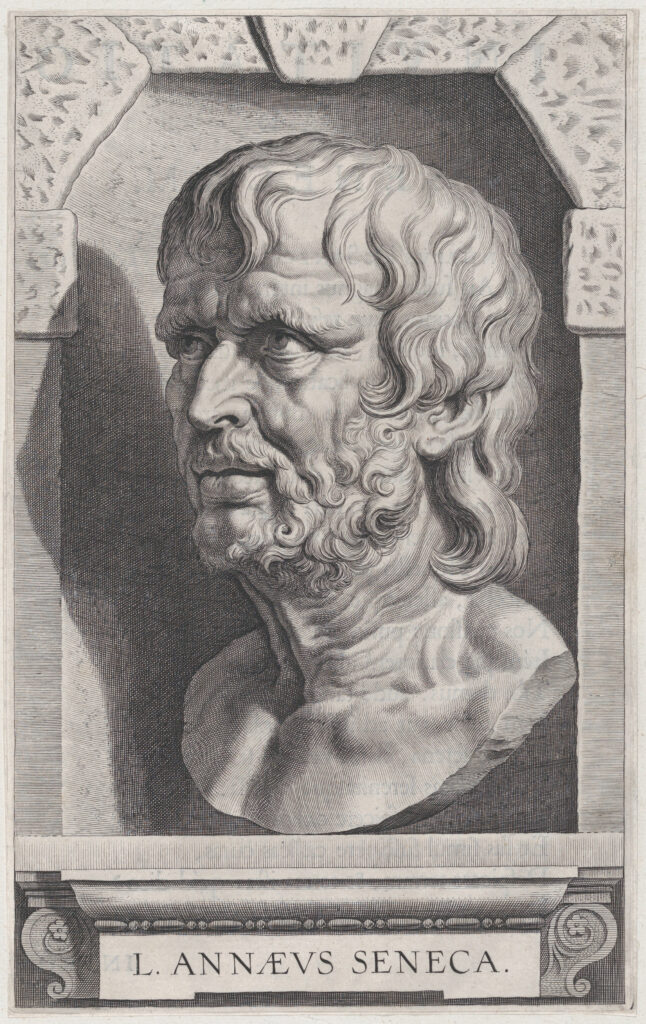 A bust long thought to show Seneca, engraved by Cornelis Galle I after Rubens, about 1615. The Metropolitan Museum of Art.
Where I See It Differently
Here's where I part ways with the Stoics a little. They're right that the first movement isn't in your control, and that what matters is how you respond: whether you assent and react from there, or not. For the Stoics, that choice is always yours. In my experience it isn't that simple. Your conditioning, your stress level and how much capacity your nervous system has can all affect whether you assent and react.
In a stressful moment the first movement can be strong. The breath might get short, the shoulders and jaw might tighten, and the heart might speed up. Research shows that strong stress can briefly weaken the parts of the brain we use to plan and hold back. In that state, the Stoic choice can be hard to make.
So I work on both: settle the body in the moment, and build capacity over time. I went deep into several traditions and stayed long enough to learn what each one does and where it stops. Here, they work well together. That's why I don't teach Stoicism on its own.
What to Do in the Moment
When you notice stress rising, you can try these, in this order.
Breathe out longer (yoga)
Patañjali's Yoga Sūtras name prāṇāyāma, the extension and control of the life force, as one of the eight limbs of yoga (Yoga Sūtras 2.29). Breathe in gently through your nose, then let the out-breath be slower and longer than the in-breath. When you can, breathe out through your mouth; it can release more. A few breaths like this are enough, and you can do it quietly, without anyone noticing. In a 2023 Stanford study, a daily breathing practice built around long, slow out-breaths improved mood more than the same time spent in mindfulness meditation.
Feel your feet (Qigong)
Notice where your body meets something solid: your feet on the floor, or your seat on the chair. You can do this in the middle of a conversation. Even a few seconds can bring your attention out of racing thoughts and into your body. Qigong builds this kind of grounded attention with its standing practice, and you can bring the same principle into any moment of your life.
Ask the Stoic question (Epictetus)
What here is actually up to me? If you're in a conversation, it's usually what you say next, and how you say it. You don't have to say anything right away: you can nod, and say you'll get back to them. If you're on your own, what's up to you can be to keep breathing out longer and feeling your feet for a while before you do anything.
The breath and the feet settle the first movement. The Stoic question then does what Stoicism does best.
Strengthen Your Nervous System Over Time
The Stoics built capacity through hardship. These are ways to do the same today.
Cold (the Stoics)
End your shower cold, for thirty seconds or more, or use a cold plunge if you have one. Seneca took cold plunges, even on New Year's Day.
Intentional breathwork (Deida, Wim Hof)
This comes from David Deida's tradition: I learned it from the teachers in his trainings. Wim Hof teaches something similar. Sitting down, try this:
For about two minutes, breathe deep and full, about a second in and a second out. Breathe in through your nose or mouth, and out through your mouth.
Breathe out and hold your breath out for as long as is comfortable.
Breathe in fully and hold it for as long as you can. That's one round.
Do three rounds if you can, a few times a week. Over time, you can hold a little longer.
Safety note. Do this breathwork sitting down, never standing, in water or while driving. You might feel dizzy or tingly during the holds. If you're pregnant or have a heart condition, epilepsy or high blood pressure, check with your doctor first.
Release held emotion (Tantra)
Tantra works with breath, movement and sound to release emotion held in the body and move energy through it. Try this a few times a week, or whenever stress has built up:
Stand and shake your whole body for a few minutes: hands, arms, shoulders, legs. Keep it loose.
Then hum for a few minutes, mouth closed, letting the sound fill your chest and head.
Then sit in silence and watch your breath for a few minutes, without changing it.
Over time this can clear the backlog of held emotion, so new feelings don't land in a cup that's already full, and they're less likely to overwhelm you.
The more capacity you build, the less the first movement can knock you over, and the easier the Stoic question is to ask.
Q&A
Does Stoicism help with anxiety?
It can. Sorting what's up to you from what isn't, and questioning the judgments that upset you, are useful tools. They tend to work best when the body is settled enough to use them.
Can Stoicism treat an anxiety disorder?
No. If anxiety is getting in the way of your life, talk to a doctor or a therapist.
Is Stoicism the same as cognitive behavioral therapy?
No, but they're related. Albert Ellis and Aaron Beck, who founded the main forms of cognitive therapy, both named the Stoics as an influence. Stoicism is a way of living. CBT is a treatment.
What is premeditatio malorum?
The Stoic practice of picturing hardships before they happen, like a loss, an insult or a setback, so they lose their power to shock you. Seneca and Marcus Aurelius both used it. Today it's also called negative visualization.
What are first movements in Stoicism?
Seneca's name for the body's automatic reactions before any judgment, like a jolt at bad news or a flushed face. The Stoics saw them as involuntary. What is up to you is assent: whether you agree with the impression and act on it.
What is voluntary discomfort in Stoicism?
Practicing hardship on purpose, like cold, hunger or simple living, so it loses its power over you. Musonius Rufus, Seneca and Epictetus all taught versions of it.
What is prāṇāyāma (pranayama)?
The word joins prāṇa, life force, vital energy or breath, and āyāma, to extend, expand or lengthen. Some read it instead as prāṇa and yama, control or restraint. So it's translated both as extending and as controlling the life force. Patañjali's Yoga Sūtras name it as the fourth of the eight limbs of yoga (2.29), and define it as pausing or regulating the flow of the in-breath and out-breath (2.49). A long, slow out-breath is one of its simplest forms.
How does Tantra work with emotions?
Tantra uses breath, movement and sound to release emotion held in the body and move energy through it, for example shaking, then humming, then sitting in silence. Practiced regularly, it can clear the backlog of held emotion. When a cup is already full, a little more water spills over. With less held inside, new feelings can come up without overwhelming you.
If you'd like to practice this with others, join the Monthly Online Gathering.