
In short
Seated meditation can feel hard when your mind is busy, and that's common. The classical traditions didn't ask people to start by sitting still. In Patañjali's Yoga Sūtras, meditation is the seventh of eight steps, built up through posture, breath and concentration, and the Buddha taught walking meditation alongside sitting. When stress has built up in the body, sitting still can make restlessness louder. Moving first can help: shaking, humming or a long out-breath, then sitting and watching the breath. Active meditations, like the ones I learned in Pune, were built this way. A single sit might already help, and the lasting changes build with daily practice. If sitting with your thoughts makes anxiety worse, switch to movement or breathing, and talk to a teacher or a doctor.
Have you ever sat down to meditate after a long day, closed your eyes, and found your mind running faster than before? Your legs might have wanted to move, or your thoughts might have kept circling back to a conversation or something on your list. Some people decide they're bad at meditation and stop.
If that sounds familiar, the problem might not be you. Here's what the traditions actually teach about sitting still, where I see it differently, and what can help.
What the Traditions Teach About Sitting Still
Patañjali opens the Yoga Sūtras by defining yoga as yogaś citta-vṛtti-nirodhaḥ, the stilling of the fluctuations of the mind (Yoga Sūtras 1.2). Stillness is the aim.
But Patañjali doesn't start there. In his eight limbs of yoga (2.29), meditation (dhyāna) is the seventh. Before it come the ethical disciplines (yama and niyama), posture (āsana), breath (prāṇāyāma), withdrawal of the senses (pratyāhāra) and concentration (dhāraṇā). Meditation is built up to, step by step, and sitting in it was never meant to be the first step. Even for posture, he asks only that it be steady and easy: sthira-sukham āsanam (2.46).
The Buddha taught mindfulness in four postures: walking, standing, sitting and lying down (Majjhima Nikāya 10). In one discourse he lists the benefits of walking meditation, among them that the concentration it brings lasts long (Aṅguttara Nikāya 5.29).
Zen practice still alternates sitting (zazen) with slow walking (kinhin).
So stillness was always the goal, and the traditions built steps to get there.
Why Sitting Still Can Feel So Hard
Many of us use the mind all day: planning, solving, scrolling, replying. It doesn't switch off just because we sit down, and an overactive mind can get louder when there's nothing else to hold its attention. After a full day, stress can also still be in the body when you sit down. The breath might be high and short, the shoulders tight, the mind busy. Sitting still can give that energy nowhere to go, so restlessness can get louder instead of quieter.
Sometimes meditation can even stir up more anxiety. A review of 83 studies found unwanted effects in about 8 in 100 people who meditated, most often anxiety. If sitting with your thoughts makes things worse, switch to movement or breathing, and tell a teacher.
Where I See It Differently
The traditions are right that stillness is the goal. Where I differ is the starting point. For a lot of people today, sitting still is the hardest place to begin.
In Pune I learned active meditations that begin with movement, breath or sound and end in silence. Osho's Kundalini Meditation, for example, has four stages of fifteen minutes: shaking, dancing, sitting still, and lying still. Moving first gives the stress somewhere to go, and the stillness afterward can come more easily.
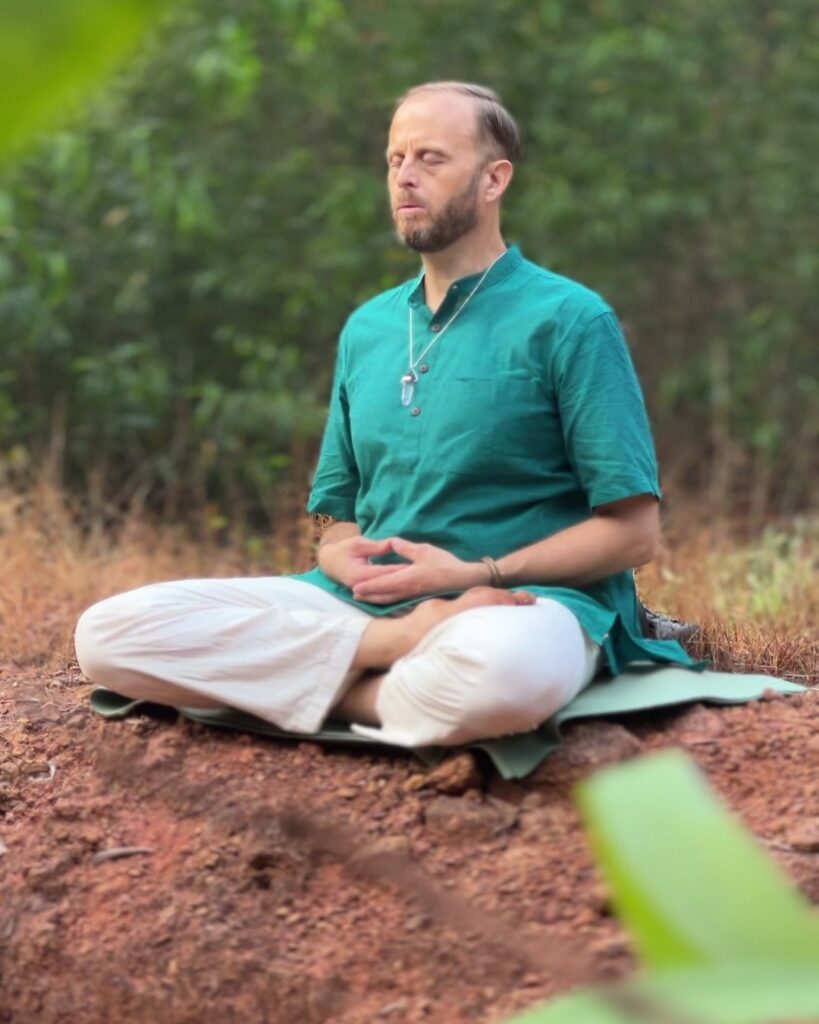 Dan meditating in the forest.
What to Do When You Sit Down
When you sit down and can't settle, you can try these, in this order.
Shake it out (active meditation)
Stand and shake your whole body for a few minutes: hands, arms, shoulders, legs. Keep it loose, and watch the body shake, as a witness.
Hum (bhrāmarī)
Sit, close your mouth, and hum on each out-breath for a few minutes, letting the sound fill your chest and head. In yoga this is bhrāmarī, the bee breath (Haṭha Yoga Pradīpikā 2.68). It also makes each out-breath long.
Watch the breath
Now sit in silence and watch your breath without changing it. Thoughts and sensations will come and go. Stay an impartial witness: observe them without getting caught up in them or taking them as who you are, and come back to the breath.
If sitting is too much today, walk
Walk slowly, feeling each step, and keep witnessing. That's meditation too.
Build Your Capacity Over Time
Stillness can get easier with practice. These build it over time.
A short daily sit
Even one sit might leave you a little calmer. The lasting changes build over time: in one study, 13 minutes of guided meditation a day improved mood, attention and memory after eight weeks.
Move your body
Exercise has some of the strongest evidence of anything for easing anxiety. A review of 97 reviews found a moderate effect, bigger with more vigorous exercise.
Stand still (Qigong)
Qigong's standing practice, zhàn zhuāng (站桩), is a halfway point between moving and sitting: feet on the floor, knees soft, attention in the body. A few minutes a day can build the kind of steadiness that makes sitting easier.
An active meditation, once a week
Try the full Kundalini Meditation (instructions on Osho's site): an hour, from shaking to lying still. It can show you, in one session, how movement can turn into stillness.
Q&A
Why can't I sit still when I meditate?
Often because the mind is overactive. Many of us use the mind all day, and it can keep racing when we sit down. Stress can also still be in the body, and stillness can give it nowhere to go. Moving or breathing first can help.
Can meditation make anxiety worse?
Sometimes. In a review of 83 studies, about 8 in 100 meditators had unwanted effects, most often anxiety. If that happens, switch to movement or breathing, and talk to a teacher or a doctor.
How soon can meditation help?
You might feel calmer after a single sit. The lasting changes build over time: in one study, 13 minutes a day improved mood, attention and memory after eight weeks.
Is it okay to move during meditation?
Yes. The Buddha taught walking meditation, and Zen alternates sitting with slow walking (kinhin). Moving or still, the key is to stay a witness: observe the thoughts and the body without getting entangled in them or identified with them.
What does the Yoga Sūtras say about meditation?
It defines yoga as the stilling of the fluctuations of the mind (1.2). In its eight limbs, meditation (dhyāna) comes seventh, after the ethical disciplines, posture, breath, withdrawal of the senses and concentration (2.29). It's built up to step by step.
What is active meditation?
Meditation that starts with movement, breath or sound and ends in silence. Osho designed several, among them Kundalini Meditation and Dynamic Meditation.
What is bhrāmarī?
The bee breath: humming on a long out-breath with the mouth closed. It's described in the Haṭha Yoga Pradīpikā (2.68).
What is zhàn zhuāng?
Qigong's standing practice: standing still with feet on the floor, knees soft and weight sinking down, attention in the body. The name means standing like a post.
If you'd like to practice this with others, join the Monthly Online Gathering.